

What flood irrigation is
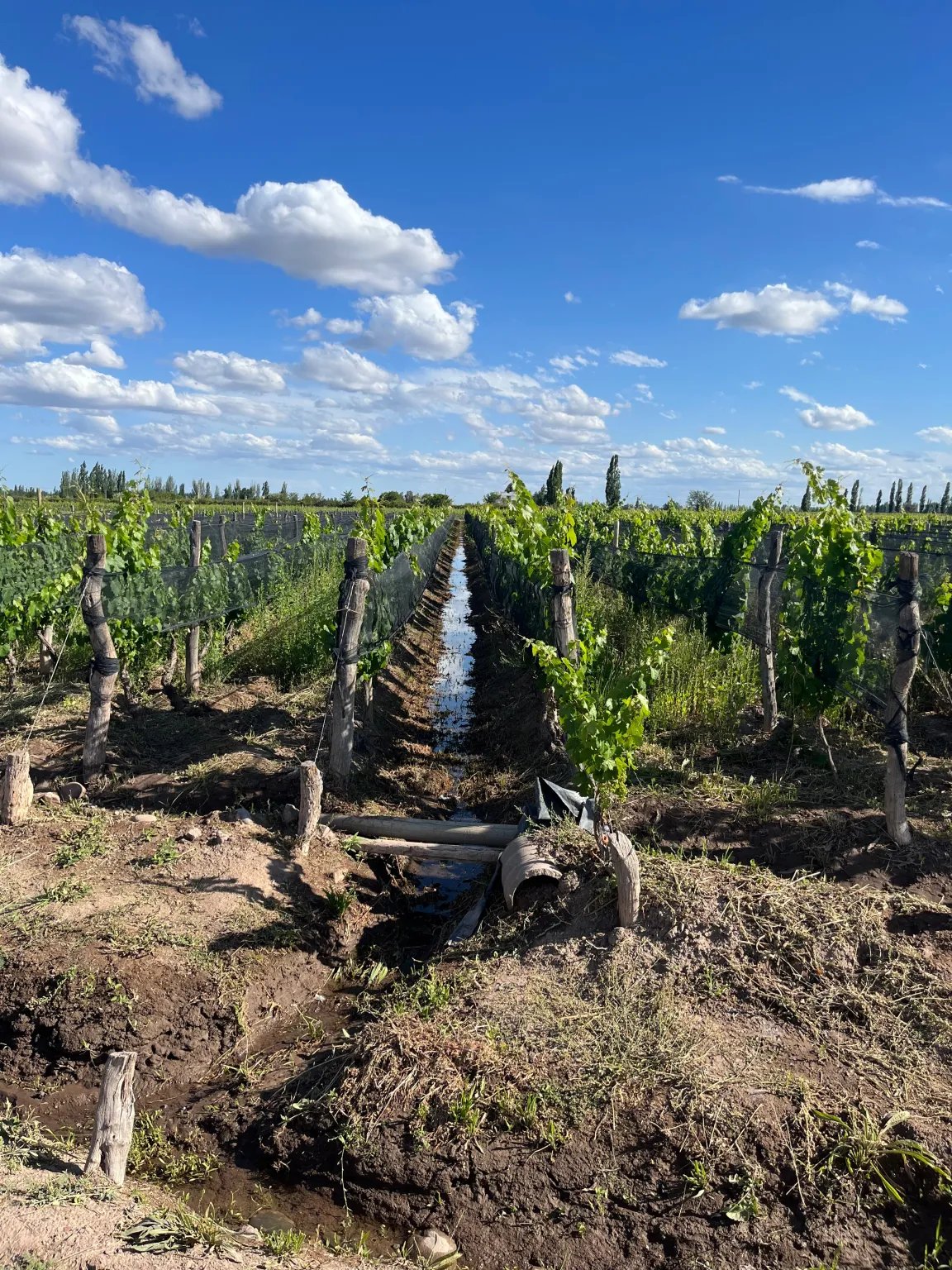
Flood irrigation means letting water run across the ground and soak in, instead of delivering it drop by drop to each plant. In a vineyard it works through channels: shallow ditches cut along and between the rows, fed from a gate at the head of the parcel. You open the gate and the water walks down the rows under gravity. No pumps, no pipes, no emitters, nothing to clog. In Mendoza the network that carries the water is called the acequia, and the version that runs in furrows beside the vines is what German speakers call Furchenbewässerung.
We have roughly thirty kilometres of these channels for seven and a half hectares of vines. They are earth, not concrete, and they are maintained by hand. Keeping them working is a job in itself and it belongs to one man on the estate: clearing silt, closing breaks, re-cutting a wall that has slumped, keeping the fall even enough that water reaches the end of a row at about the same time it reaches the start. Concrete would need less of this, and we have chosen not to line them. Earth channels leak a little into their own banks, and that is where the grass, the insects and the birds along the rows live.
Where the water comes from
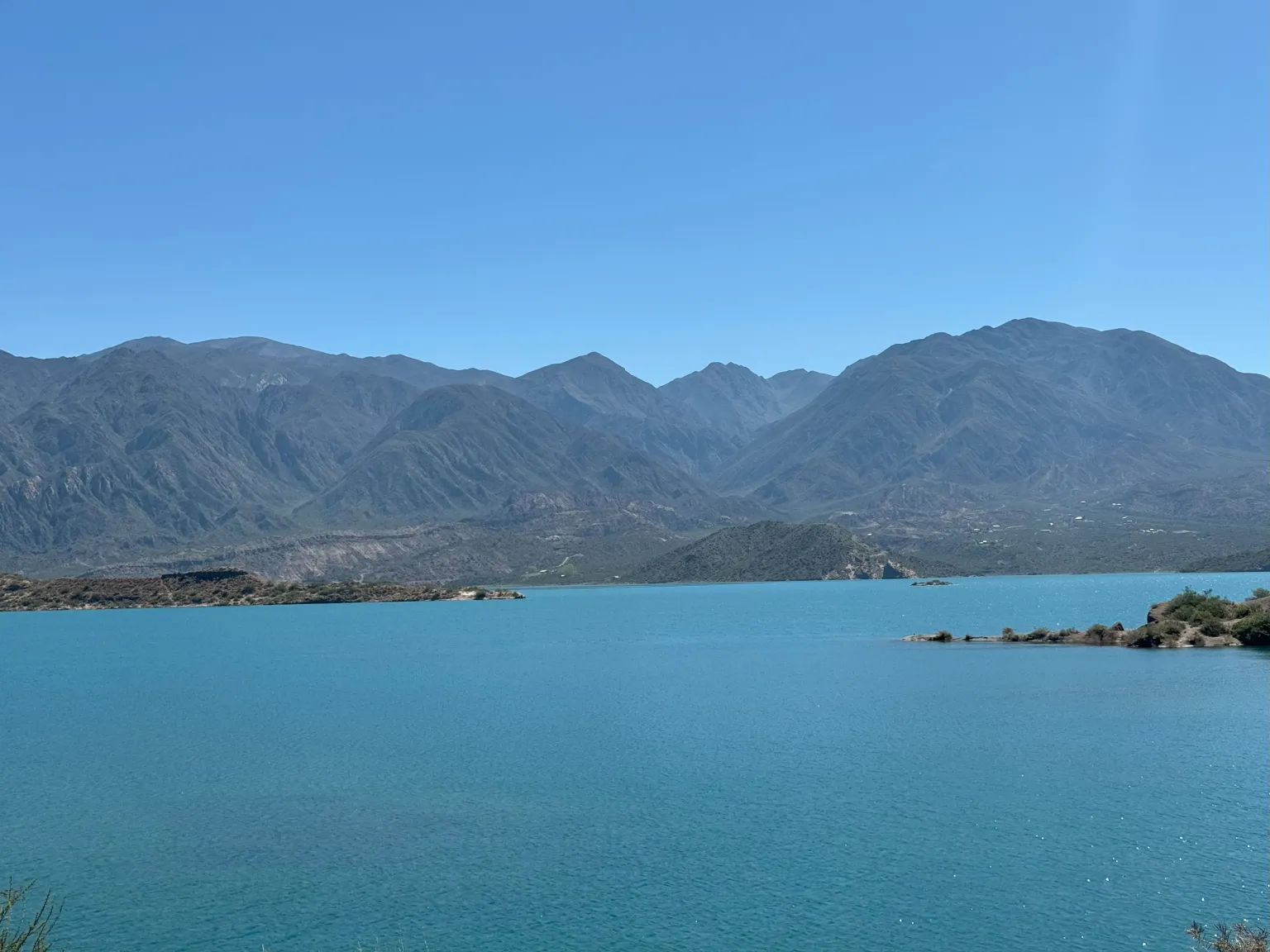
Almost none of it is rain. Perdriel receives around 200 millimetres a year, which is a desert figure. Everything the vines drink is Andean snow: it falls above four thousand metres, melts in spring, runs into the Mendoza River and is held at Lake Potrerillos before being released into the canals that irrigate the whole of Luján de Cuyo. The reservoir is about an hour from the estate on the road to Chile, and guests staying with us often drive up for an afternoon. It is worth the trip, and it explains the vineyard better than anything we can say at the table.

The Departamento General de Irrigación assigns every property a turno, a fixed slot in the rotation when the canal is ours to draw from. What we do with the slot is our decision. Through the growing season we open the gate about once a week and let in roughly what a heavy rainfall would deliver, then close it and leave the soil alone. In the weeks before harvest we do not open it at all: water that late swells the berries and dilutes precisely what the season spent concentrating.
Flood or drip
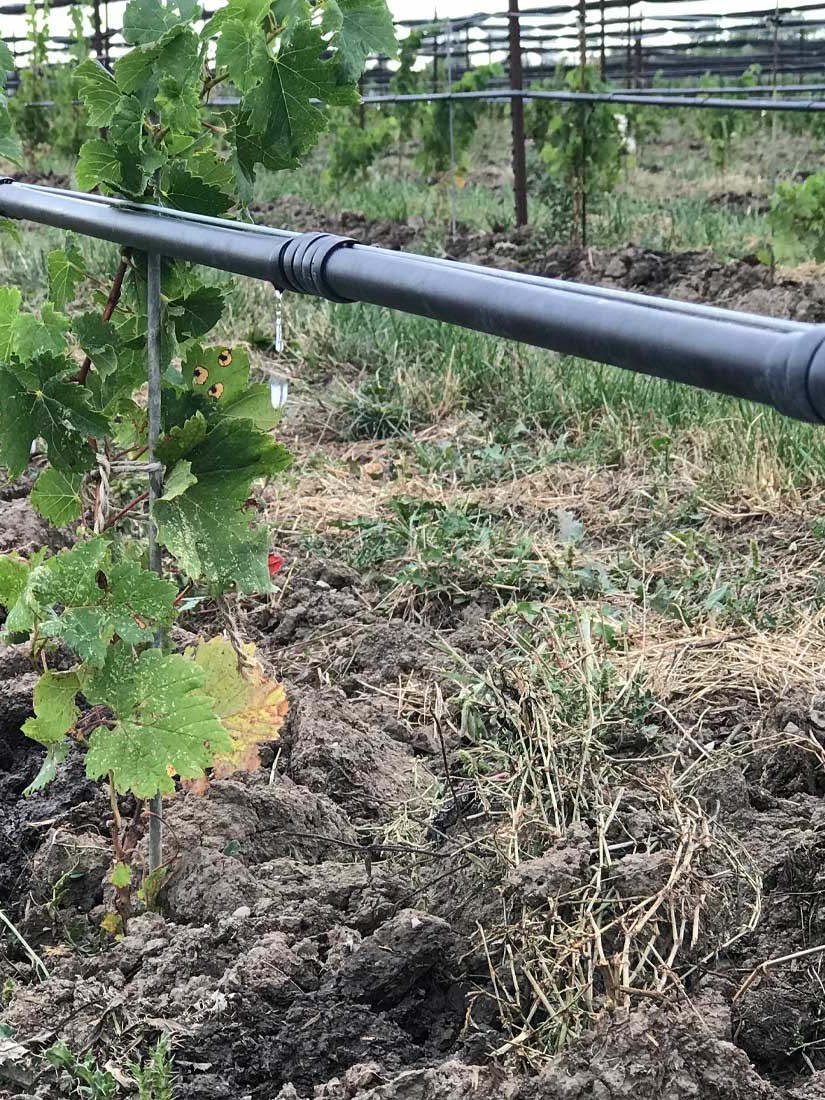
Drip is the modern standard and it deserves to be. It puts a measured amount of water exactly where the roots are, it works on slopes where water will not sit still, it can carry nutrition to the plant, and it lets a grower vary the ration vine by vine. Where water is expensive or scarce, or where the vineyard is young and the roots are still shallow, drip is simply the better tool. If we planted a new vineyard tomorrow on bare land, we would probably drip it.
This vineyard is not bare land. These roots have spent a century following deep, occasional saturation downwards, through a metre of sand into the stones beneath, and that is where they still are. Converting to drip would ask hundred-year-old plants to relearn where water comes from and to live in a narrow wet zone around an emitter, which is a poor trade when the deep root system is the thing that makes the fruit worth picking. Flooding periodically also flushes salts down past the root zone instead of concentrating them near the surface, wets the whole soil surface so the cover crops between the rows survive, and installs nothing that has to be dug up and replaced every decade or two.
What it costs us
Time, mostly. Thirty kilometres of earth channel is a permanent maintenance obligation, the levelling has to be right or half a row goes thirsty while the other half sits wet, and none of it can be run from a phone. We cannot fertigate, so anything the soil needs goes on as compost or as a cover crop instead. And an honest caveat: our water is allotted by turno rather than metered by the litre, so I am not going to claim flood irrigation as a water-saving decision. It is a decision about what this particular vineyard, planted in 1920 and never replanted, is built to receive.