
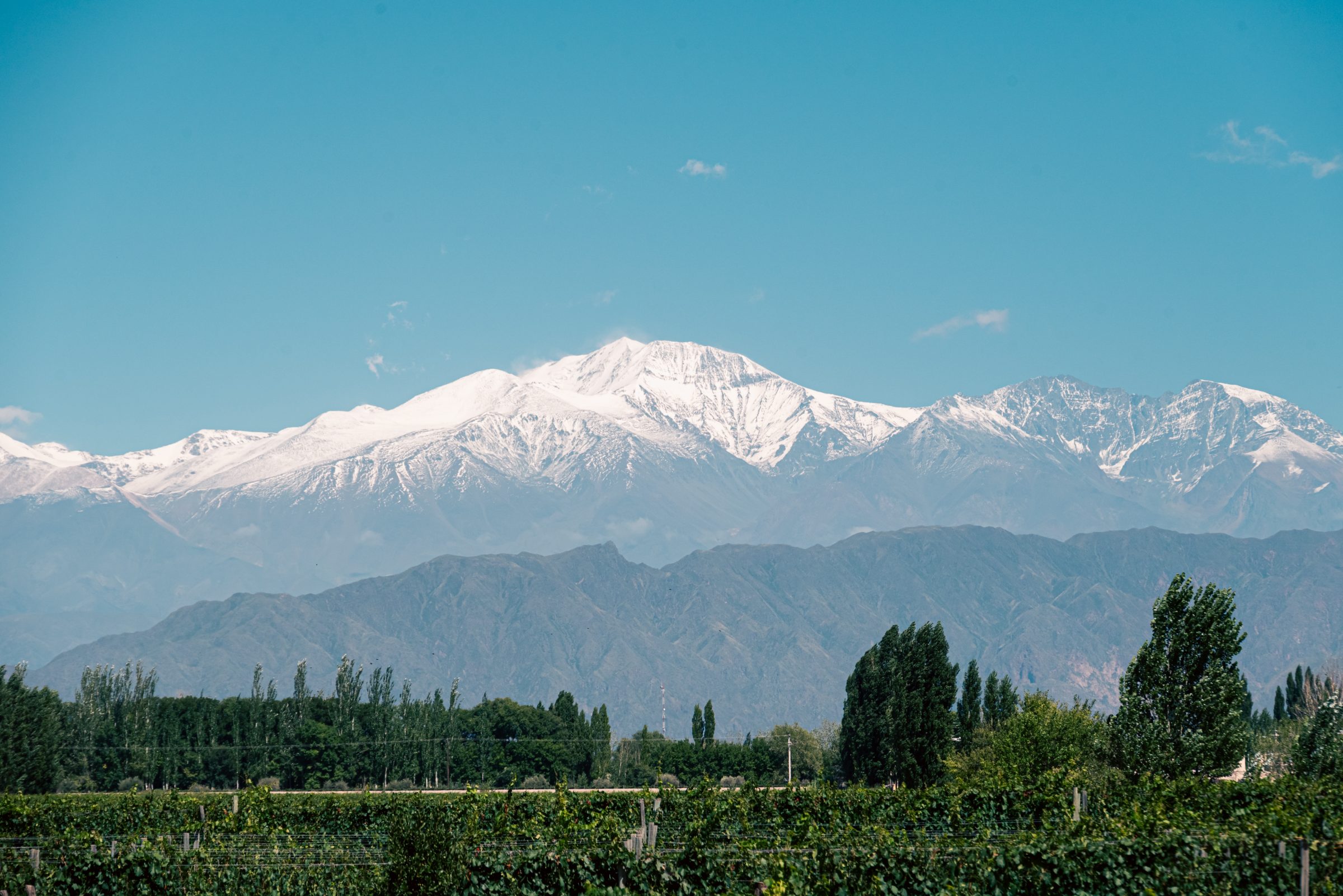
Luján de Cuyo is where Argentine Malbec built its reputation. Within it, Perdriel behaves differently from its more famous neighbours, and the reasons are mostly under your feet.
Luján de Cuyo was Argentina's first denomination of origin, established for Malbec, a formalisation of something growers here had known for decades. The department runs along the western edge of the Mendoza plain, climbing towards the Andes, and it is not one place. Las Compuertas and Vistalba sit high and cool. Agrelo, further south and east, is warmer with heavier soils and gives the broad, generous Malbec that a great deal of the world now recognises as the Argentine style. Perdriel sits between them, on the old alluvial fan of the Mendoza River, at around 950 metres.
Dig here and the story is quickly obvious. Under something between half a metre and a metre of sand and silt loam there is river stone: rounded, water-worn, the bed of a river that has since moved. Water drains through it almost immediately. There is very little organic matter and no reservoir of fertility to speak of. A vine planted in this ground has to send roots down and out to find what it needs, and it will never produce a large crop, whatever you do to encourage it.
Cold nights, on schedule
The second factor is the daily swing. Summer afternoons here reach the mid-thirties. The same nights routinely drop into the low teens, because we are high, the air is dry, and the mountains are close enough to send cold air down the valley after sunset. That amplitude is why the fruit can reach full flavour ripeness while retaining acidity; the vine spends the night with its metabolism slowed, holding on to what the day put in.
The third is water, and where it comes from. Perdriel receives very little rain. Practically everything the vines drink is Andean snowmelt, arriving through channels that predate every one of us, distributed on a schedule fixed by the irrigation authority. This has two consequences worth understanding: nothing here happens by accident, since every litre is a decision; and disease pressure is remarkably low, because the fruit almost never sits wet. Rot is not the problem it is in a maritime climate. Hail and late frost are.
What it does in the glass
I want to be careful here, because terroir writing slides easily into assertion. Two honest observations. First, the tannin. Malbec from these stony, low-fertility soils tends to arrive with a firm, fine-grained structure rather than the plush texture that deeper, more fertile ground produces; it needs time and it rewards food. Second, the fruit register. Ripeness here reads as red and dark fruit with a floral, violet edge, rather than the sweet, jammy concentration that a warmer site delivers. Our own picking dates land earlier than a visitor usually expects.
None of that makes Perdriel better than Agrelo or Vistalba. It makes it a specific answer to a specific question, and it explains why the Malbec we make does not taste like the Malbec most people expect from Argentina. If you have written the variety off as reliably big and soft, this is the corner of Mendoza I would ask you to try before you finish the thought.
The whites make the same argument from the other direction. Sémillon and Torrontés both keep their acidity here and both stay aromatic at full ripeness, which in a region this warm is not something you can take for granted. That the previous generation of growers regarded them as second-rank varieties says more about fashion than about the site.